Experimental underwater test rigs off Pembrokeshire attracted 76 types of marine life, including sea slugs and porcelain crabs. Local drinks producer Barti Rum is now funding further research with seaweed and shellfish farm Câr-y-Môr to see whether such habitats can last.
The project, known as Barti & The Big Blue, is investigating whether simple underwater structures can provide lasting habitat rather than only temporary places for marine life to settle.
The next phase will examine how long the habitats last, what happens as their natural materials break down and whether marine growth can be transferred successfully. Researchers will also investigate what happens to the biomass when the structures reach the end of their useful life.
From fishing ropes to marine research
The idea began in 2020, when Pembrokeshire fisherman Danny Curtis noticed substantial seaweed growth on his lobster-pot ropes. The seaweed had to be removed, but the discovery raised the possibility that the ropes might provide useful habitat for marine organisms.
Barti founder Jonathan Williams began experimenting with the idea before involving Swansea University, Pembrokeshire Coastal Forum, MEECE/ORE Catapult and marine biologist Jon Moore.
In February 2023, 12 experimental rigs, each measuring 15 metres, were placed at the META Dale Roads test site in Pembrokeshire.
The structures were colonised by marine life, prompting further investigation into whether similar habitats could be deliberately created and maintained.
The latest phase is intended to establish more about the durability and performance of the approach. The initial discovery is promising, but the number of species observed does not by itself demonstrate that the structures have restored an ecosystem or delivered a measurable environmental benefit.
Câr-y-Môr brings in sea-farming expertise
Câr-y-Môr, a regenerative seaweed and shellfish farm based on the Pembrokeshire coast, is supporting the next stage of the work.
Its managing director, Owain Haines, said Barti founder Jonathan Williams was also one of Câr-y-Môr's founding members and investors.
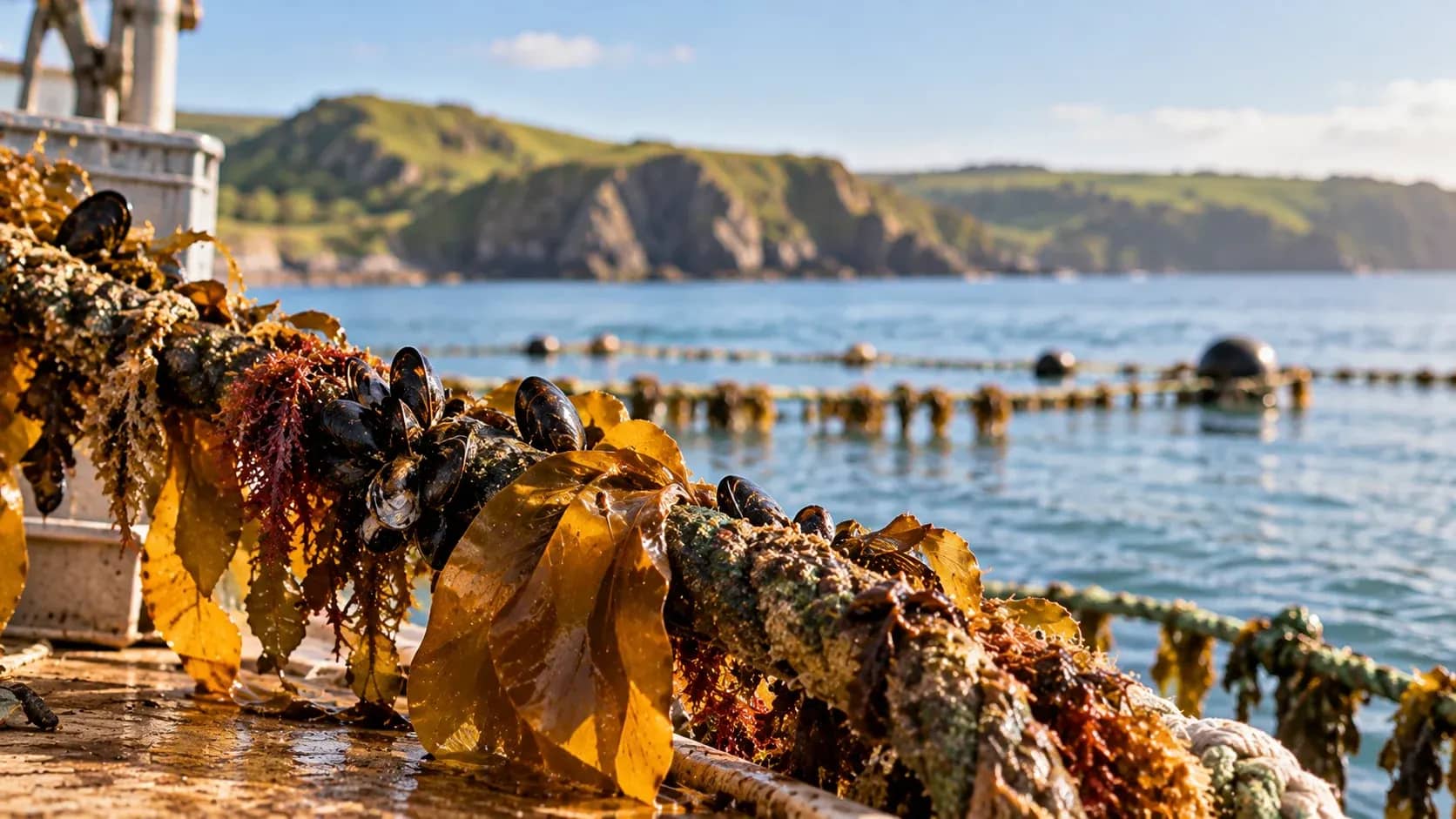
The farm is deploying test ropes at its three-hectare sea farm in Ramsey Sound, where naturally settled seaweed and mussel spat have already begun growing on the ropes. The team plans to monitor growth and calculate the amount of carbon captured.
The research will also examine what happens when the natural materials supporting the habitats deteriorate. Understanding the lifespan of the structures and their effects over time will help determine whether the approach could be useful beyond the original test site.
Could the idea extend beyond Pembrokeshire?
Barti has expressed an ambition to explore the approach elsewhere around the Welsh coast, including North Wales. Any wider use would depend on the findings of the ongoing work, appropriate locations and the availability of suitable partners.
The project has a connection to the Welsh food and drink sector because it brings together a coastal drinks brand and a business growing seaweed and shellfish. Barti's spiced rum uses hand-picked laver seaweed from the Pembrokeshire coast, while Câr-y-Môr's work centres on marine food production.
The next phase will help establish whether the early observations can be translated into a durable and repeatable method for supporting marine habitats along the Welsh coast.