Traditional Welsh food is far more diverse than many people realise. While favourites such as Welsh cakes, cawl and Welsh rarebit are well known, Wales also boasts world-class lamb and beef, award-winning cheeses, outstanding seafood, artisan drinks and a thriving community of independent food producers.
Centuries of farming, fishing and baking traditions have helped shape a cuisine rooted in quality local ingredients rather than elaborate recipes. Today, those traditions sit alongside an exciting generation of producers who continue to innovate while celebrating Welsh heritage.
Whether you're planning a visit to Wales, researching traditional Welsh cuisine or simply looking for new foods to try, this guide explores the dishes, ingredients and products that have helped define Welsh food.
What's covered in this guide
Quick answer: What food is Wales known for?
What makes Welsh food unique?
Traditional Welsh savoury dishes
Cawl – Wales' national dish
Welsh rarebit
Glamorgan sausages
Laverbread
Tatws Pum Munud
Tatws Popty
Faggots and peas
Cockles
A cuisine shaped by resourcefulness
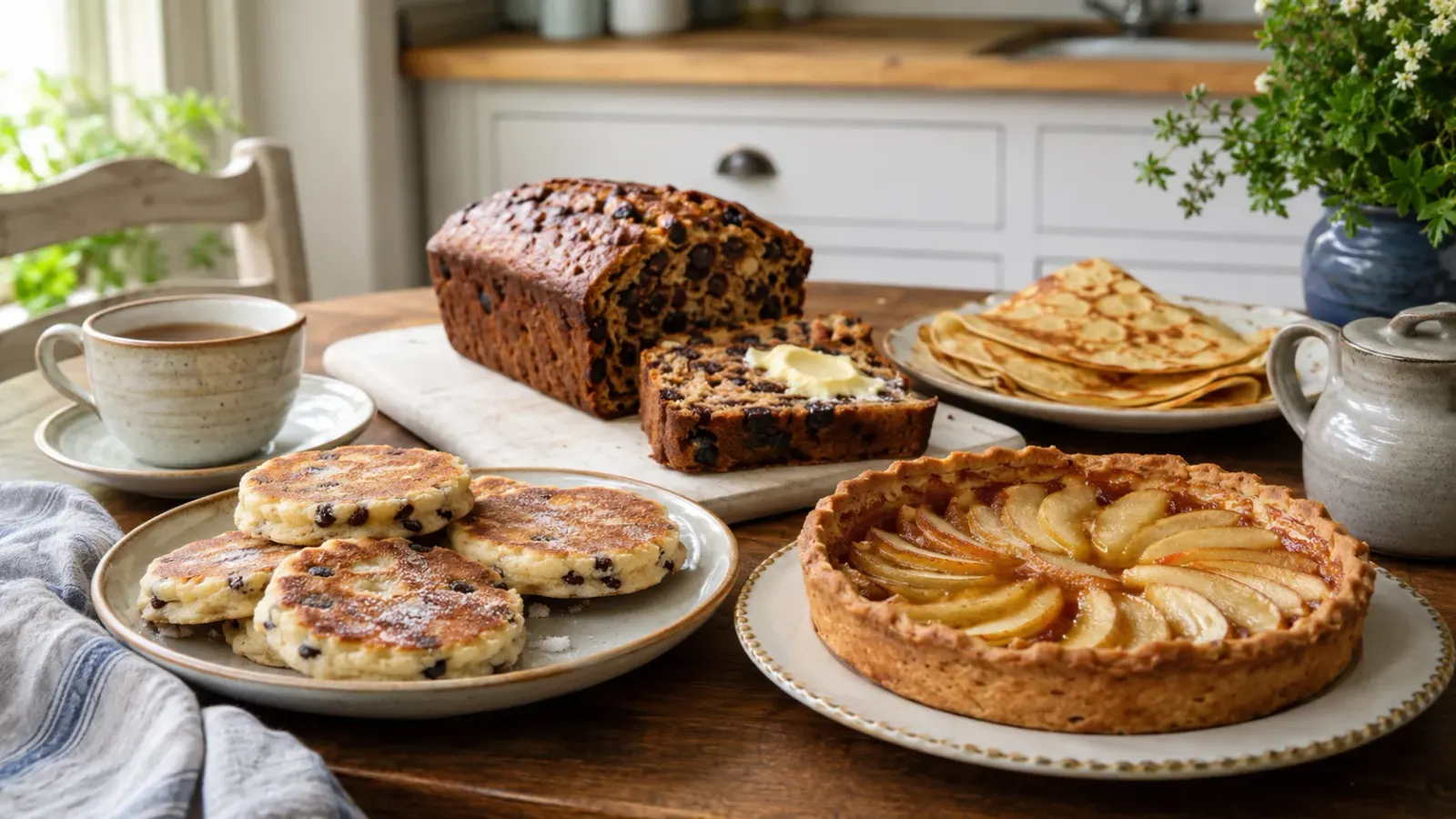
Welsh cakes
Bara brith
Traditional Welsh breads
Traditional Welsh desserts
Quick answer: What food is Wales known for?
Wales is best known for traditional dishes including cawl, Welsh rarebit, Welsh cakes, bara brith, laverbread and Glamorgan sausages. The country is also renowned for producing high-quality Welsh Lamb (PGI), Welsh Beef (PGI), artisan cheeses, seafood from its extensive coastline, and an increasing number of internationally recognised food and drink products.
The Welsh food industry combines centuries-old traditions with modern innovation. Alongside historic recipes passed down through generations, Wales is home to award-winning distilleries, craft breweries, chocolatiers, bakeries and speciality food producers exporting products around the world.
What makes Welsh food unique?
Like every national cuisine, Welsh food has been shaped by its geography, climate and history.
With mountains covering much of the country, fertile river valleys, more than 1,680 miles (2,700 kilometres) of coastline and a long agricultural tradition, Wales has developed a cuisine based on making the most of locally available ingredients.
Historically, many communities were isolated from one another, particularly in rural areas. Families often relied on ingredients they could produce themselves or source locally, including lamb, beef, dairy products, oats, root vegetables and seafood. As a result, traditional Welsh cooking places great emphasis on simple recipes that allow the quality of the ingredients to shine.
The country's industrial heritage also played a role. Mining communities needed filling, affordable meals that could feed large families after long shifts underground. Dishes such as cawl became staples because they were nutritious, economical and adaptable according to whatever vegetables and meat were available.
Today, Welsh cuisine continues to reflect those values while embracing new influences. Independent producers increasingly combine traditional methods with modern techniques, creating products that celebrate Welsh provenance while appealing to contemporary tastes.
Traditional Welsh savoury dishes
Traditional Welsh cooking has always been rooted in practicality. Many of the country's best-known dishes were created using affordable, locally available ingredients that could feed families and make the most of seasonal produce.
While modern Welsh cuisine has become increasingly diverse, these classic recipes remain at the heart of Wales' culinary identity and continue to appear in homes, pubs, restaurants and cafés across the country.
Cawl – Wales' national dish
If there is one dish that best represents traditional Welsh food, it is cawl.
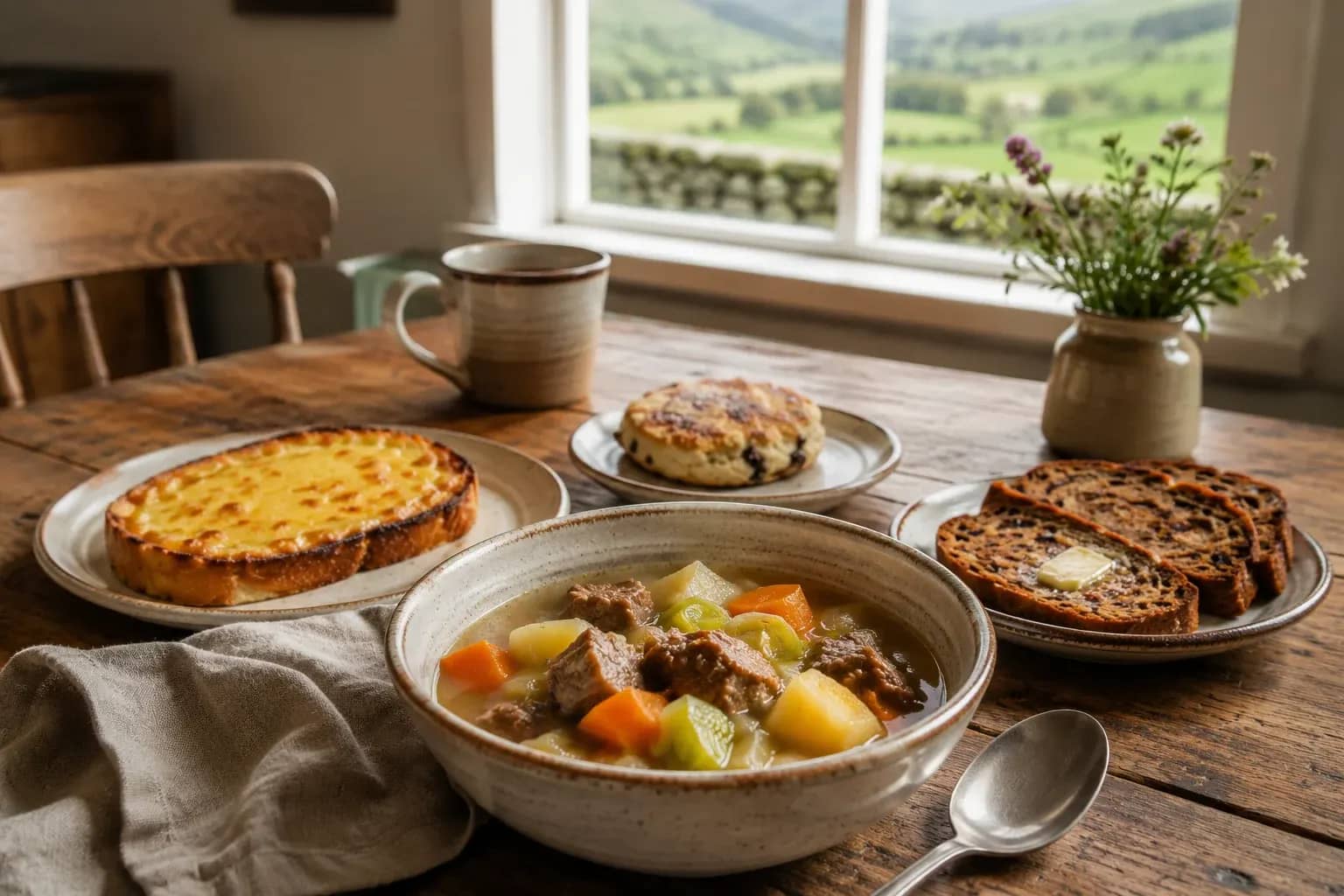
Widely regarded as Wales' national dish, cawl is a slow-cooked soup or stew traditionally made with Welsh lamb or beef, root vegetables and leeks. Every family has its own variation, but common ingredients include potatoes, carrots, swede, onions and parsley.
Historically, cawl was prepared in a single pot over an open fire and eaten over several days. The broth was often served first, followed by the meat and vegetables as a second course. This economical approach helped households make the most of limited ingredients while producing a filling and nutritious meal.
Although lamb is perhaps the best-known version today, earlier recipes often used bacon or beef depending on what was available. Seasonal vegetables also varied throughout the year.
Today, cawl remains a staple on menus across Wales, particularly during the colder months. Many restaurants continue to prepare it using locally sourced Welsh Lamb (PGI), giving visitors the opportunity to experience one of the country's most authentic dishes.
Welsh rarebit
Despite its name, Welsh rarebit contains no rabbit.
Instead, it consists of toasted bread topped with a rich savoury sauce made primarily from melted cheese, often enhanced with mustard, Worcestershire sauce, ale or stout, butter and seasoning before being grilled until golden.
The dish has existed for centuries and is one of Wales' most famous culinary exports. Although its precise origins remain debated, references to "Welsh rabbit" appeared as early as the eighteenth century before the name gradually evolved into Welsh rarebit.
Its popularity lies in its simplicity. High-quality cheese transforms an everyday slice of bread into a comforting meal that can be enjoyed as a light lunch, starter or supper.
Many chefs now prepare Welsh rarebit using artisan cheeses produced in Wales, adding further regional character to this enduring classic.
Glamorgan sausages
Unlike traditional pork sausages, Glamorgan sausages contain no meat.
Originating in the historic county of Glamorgan, these vegetarian sausages are made from cheese, breadcrumbs, leeks and herbs before being coated in breadcrumbs and fried until crisp.
These vegetarian sausages were traditionally made with Glamorgan cheese, which is no longer available. Caerphilly is now commonly used instead.
Long before vegetarian cooking became fashionable, Glamorgan sausages demonstrated how Welsh households could create satisfying meals using dairy produce rather than meat. They remain popular throughout Wales and frequently feature on café and pub menus.
Laverbread
One of Wales' most distinctive traditional foods is laverbread.
Despite the name, it contains no bread. Welsh laverbread is made by cooking laver seaweed (Porphyra umbilicalis) with water and salt; it may be minced into a paste or chopped for a coarser texture.
Laver has been gathered from the Welsh coastline for centuries, and laverbread has become particularly associated with South Wales, where it is often served as part of a traditional Welsh breakfast alongside bacon, cockles and oatmeal.
The seaweed is naturally rich in minerals, iodine and vitamins, making it both nutritious and deeply connected to Wales' coastal heritage.
While some visitors find its appearance unusual, laverbread's rich umami flavour has led many contemporary chefs to incorporate it into modern dishes ranging from seafood recipes to breads and savoury pastries.
Tatws Pum Munud
One of the lesser-known Welsh dishes is tatws pum munud, which translates as “five-minute potatoes.”
A version recorded in Mynytho, Llŷn, combines bacon with sliced potatoes and onions, seasoning, a little flour and water. It is cooked slowly in a deep frying pan until the water is absorbed and the potatoes are golden brown.
Tatws Popty
Another traditional potato dish is tatws popty, meaning “oven potatoes.”
In a family version recorded by Amgueddfa Cymru, potatoes and onions are placed in a roasting tin and covered with water. A large piece of beef or mutton is placed on top before everything is roasted in the oven.
Faggots and peas
Although found elsewhere in Britain, faggots have long been associated with parts of South Wales, particularly former mining communities.
Traditionally made from minced pork and offal mixed with herbs, breadcrumbs and onions, they were an economical way of ensuring no part of the animal went to waste.
Served with peas, mashed potatoes and rich onion gravy, faggots became an important working-class meal throughout the industrial valleys.
Today, many butchers continue to make them using traditional recipes, preserving another element of Wales' culinary history.
Cockles
Cockles have been harvested around the Welsh coastline for centuries, particularly in Carmarthen Bay and around the Gower Peninsula.
These small shellfish have traditionally been collected by hand before being lightly cooked and sold fresh or preserved.
Cockles are perhaps best known as part of a traditional Welsh breakfast served alongside laverbread and bacon, but they are also enjoyed in salads, seafood platters and pasta dishes.
The long history of cockle gathering reflects the importance of Wales' coastline in shaping local diets and food traditions.
A cuisine shaped by resourcefulness
What unites these traditional Welsh dishes is not extravagance but ingenuity.
Most were developed by farming and mining communities that relied on seasonal ingredients, home-grown vegetables and locally produced meat or dairy products. Recipes evolved according to what families had available, resulting in food that was nourishing, economical and full of character.
Although contemporary Welsh cuisine continues to evolve, these classic dishes remain central to the nation's identity. They are served in restaurants, prepared in family kitchens and celebrated at food festivals across the country, ensuring that Wales' culinary traditions continue to be passed from one generation to the next.
Welsh cakes
Few foods are more closely associated with Wales than Welsh cakes.
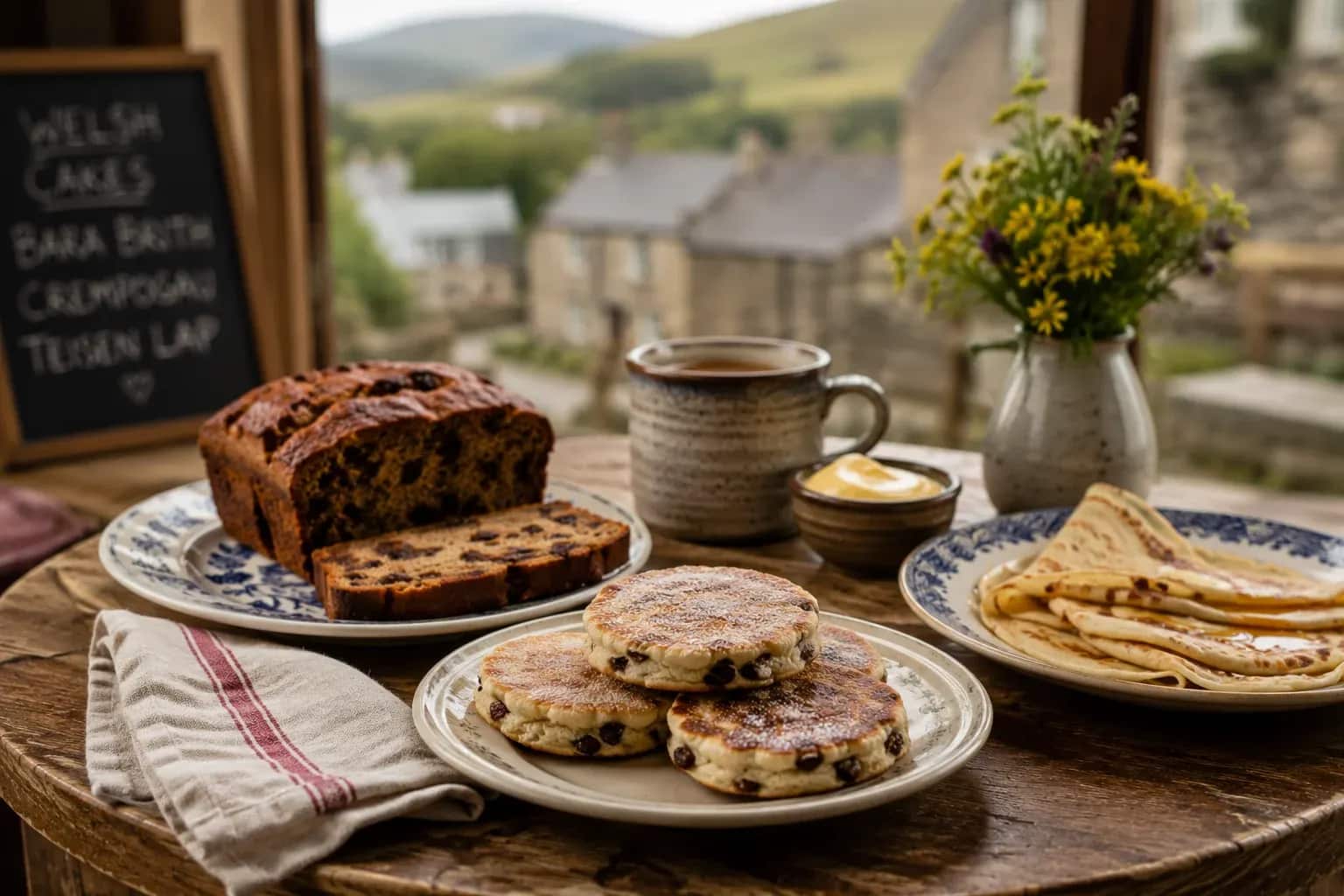
Known in Welsh as picau ar y maen ("cakes on the stone"), they are traditionally cooked on a cast-iron bakestone rather than baked in an oven. The result is a lightly crisp exterior with a soft, gently spiced centre.
Classic Welsh cakes are made using flour, butter, sugar, dried fruit, eggs and mixed spice before being dusted with caster sugar while still warm.
Although the traditional recipe remains the best known, many modern Welsh bakeries now produce variations featuring chocolate chips, citrus peel, toffee, cherries or seasonal ingredients. These contemporary twists have helped introduce Welsh cakes to new audiences while preserving the character of the original recipe.
Today they are sold in independent bakeries, supermarkets, farm shops and cafés throughout Wales and remain one of the country's most recognisable treats.
Bara brith
Another cornerstone of Welsh baking is bara brith, whose name translates simply as "speckled bread."
Made with tea-soaked dried fruit and warming spices, bara brith occupies a place somewhere between bread and fruit cake. Traditionally sliced thickly and spread generously with butter, it has long been enjoyed alongside a pot of tea.
Recipes differ from region to region and family to family. Some use yeast to create a lighter loaf, while others rely on baking powder for a denser, cake-like texture.
Its enduring popularity has inspired modern interpretations, with producers incorporating bara brith flavours into ice cream, chocolates, spirits and desserts while retaining the distinctive blend of fruit and spice that has defined the loaf for generations.
Traditional Welsh breads
Before commercial bakeries became commonplace, many Welsh households baked their own bread.
Regional recipes included farmhouse loaves, oat-based breads and products cooked on bakestones, reflecting the ingredients available locally. Baking was often a weekly ritual, with loaves prepared to feed families throughout the week.
Today, artisan bakeries across Wales continue to revive traditional techniques, using long fermentation, locally milled flour and handcrafted methods to produce breads with greater flavour and texture.
This revival has helped reconnect consumers with traditional Welsh baking while supporting local grain growers and independent food businesses.
Traditional Welsh desserts
No guide to Welsh food would be complete without mentioning the country's much-loved desserts and sweet treats.
Although Welsh cakes and bara brith are perhaps the best-known, Wales also has a rich tradition of puddings, fruit-based desserts and celebration cakes.
Recipes such as crempogau (Welsh pancakes), rice pudding, apple tart, teisen lap (moist butter cake) and regional fruit cakes have long featured in Welsh homes, often using seasonal ingredients grown close to home.
Many desserts developed from simple pantry staples including flour, butter, eggs, milk and locally grown fruit. Their appeal lies not in elaborate decoration but in honest flavours and comforting familiarity.
Today's artisan bakeries and cafés continue to reinterpret these classics while remaining faithful to traditional recipes, ensuring they remain part of modern Welsh food culture.