Drought has spread across Wales
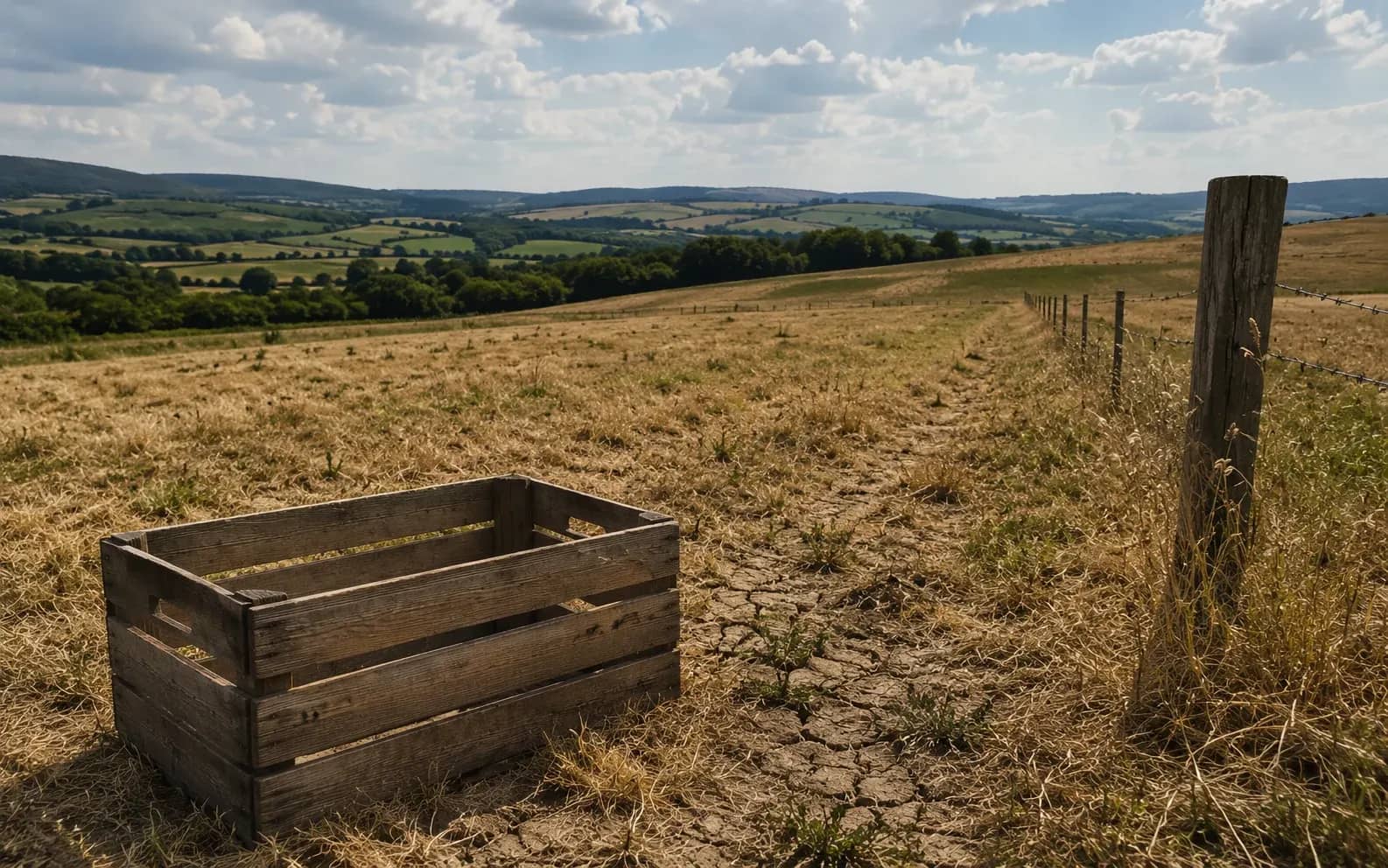
Wales is now officially in drought following one of the country's driest summers on record.
Natural Resources Wales initially declared drought status in North Wales and the Upper Severn on 23 July, following prolonged hot weather, exceptionally low river flows and widespread wildfires. At that point, other parts of the country had already moved into prolonged dry-weather status.
By 30 July, NRW had extended drought status across the whole of Wales.
The agency said Wales had received only 8% of its long-term average rainfall for July and that the month was on course to be the driest July since records began around 190 years ago.
The situation has continued to develop since the original declaration.
NRW's August update says Wales remains in drought, with continued concerns about impacts on the environment, agriculture and land management.
Why food producers are affected
Drought might initially sound like a water-management story, but its consequences extend directly into food production.
Farmers depend on water for livestock, crops and grassland.
When rainfall remains low for an extended period, pasture growth can be affected, water sources come under pressure and crops can suffer.
The impact isn't necessarily confined to one particular type of farming.
A dry summer can affect livestock farmers through forage availability and water requirements, while growers face challenges around irrigation and crop development.
Those pressures can eventually work their way through the food supply chain.
Welsh rivers are under pressure
NRW has highlighted exceptionally low flows in rivers across parts of Wales.
Its initial drought declaration identified rivers with flows at or approaching record lows, while groundwater levels were also falling. In North Wales, some areas had received no significant rainfall since early July at the time drought status was declared.
The situation has also required specific interventions.
On the River Tywi, NRW requested additional releases of water from Llyn Brianne Reservoir after low flows created concerns for river habitats and fish populations. Welsh Water began the additional releases at the end of July, increasing flows downstream of Nantgaredig by about 50% for a 30-day period.
That illustrates the competing demands placed on water during prolonged dry weather.
Food resilience becomes more important
For Welsh food businesses, the drought adds another reason to consider resilience.
A food system depends on functioning farms, but also on reliable water, transport, processing and supply chains.
If extreme weather becomes more frequent or prolonged, businesses may need to adapt how they manage water, feed, crops and production.
That doesn't mean every food product will immediately become more expensive or scarce because of this summer's conditions.
It does mean that weather resilience is becoming an increasingly practical issue for Welsh agriculture.
The Welsh Government's Sustainable Farming Scheme already recognises the need for farm businesses to adapt to climate change and extreme weather, including drought.
A challenge for the wider Welsh food sector
The drought also highlights how closely food production is tied to Wales' natural environment.
The country's food industry relies heavily on agricultural land, livestock, water and the ecosystems surrounding farms.
That makes environmental resilience more than a conservation issue.
It is part of maintaining the ability to produce food.
For consumers, the immediate impact may be difficult to see. But for farmers and food businesses, prolonged drought can affect decisions about what can be produced, how land is managed and where resources are allocated.
And with NRW now reporting drought conditions across the whole country, the issue has moved beyond a short-lived regional weather story.
It is now another test of how resilient Wales' food system can be when conditions become increasingly difficult.
Sources
Natural Resources Wales - drought declaration for North Wales and Upper Severn.
Natural Resources Wales - drought extended across Wales.
Natural Resources Wales - 2026 dry weather update.
Natural Resources Wales - River Tywi water releases.
Welsh Government - Sustainable Farming Scheme.