The ultimate guide to Welsh desserts: Traditional sweet treats every food lover should try
By Paul Lucas
From bakestone classics to rich fruit loaves, puddings and regional bakery favourites, Welsh desserts offer a delicious and often underappreciated insight into the country’s culinary heritage.
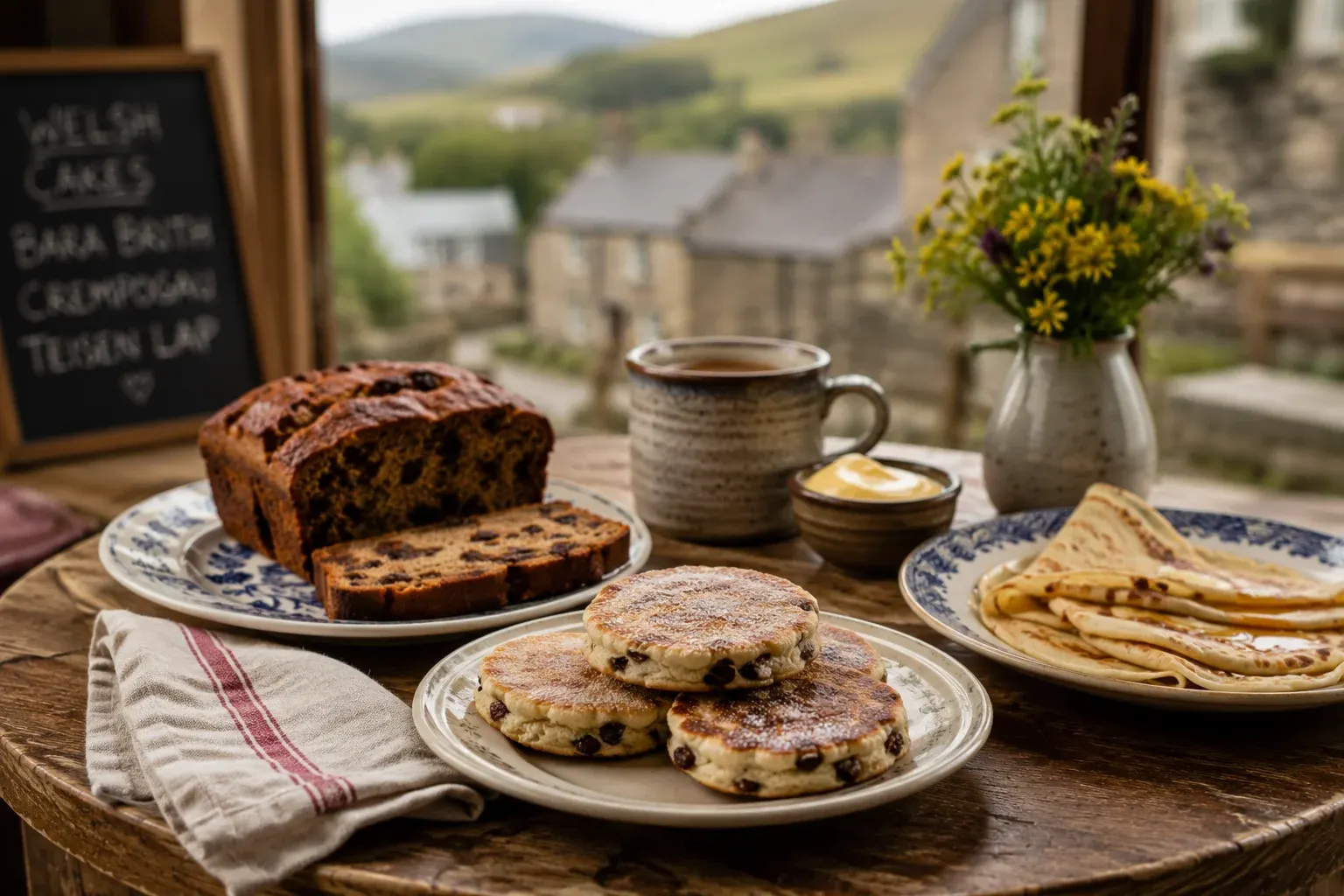
Editorial image generated with AI.
Welsh cuisine is often associated with hearty dishes such as cawl, lamb and rarebit, but the country’s dessert and baking traditions are equally rich in history and cultural significance. Developed over centuries in farmhouses, mining communities, market towns and family kitchens, Welsh desserts are shaped by practicality, local ingredients and a deep-rooted baking culture.
Traditional recipes frequently rely on staples such as flour, butter, dried fruit, oats, cream and spices, ingredients that were widely accessible and adaptable across different Welsh regions. Many desserts emerged not as luxury items, but as nourishing, affordable treats that could be prepared at home and shared across generations.
Today, Welsh desserts remain central to bakeries, food festivals, independent cafés and artisan producers, offering both locals and visitors a flavour of Wales’ culinary story.
Welsh cakes remain the nation’s most recognisable sweet staple
No guide to Welsh desserts would be complete without Welsh cakes, perhaps the country’s most iconic sweet treat.
Traditionally cooked on a bakestone or griddle rather than baked, Welsh cakes are made from flour, butter, sugar, dried fruit and warming spices. Their distinctive texture — slightly crisp on the outside yet soft and crumbly within — has made them enduringly popular.
Served warm, often dusted with caster sugar, Welsh cakes are enjoyed across Wales as an everyday treat, snack or tea accompaniment. Modern variations may include chocolate chips, lemon zest or alternative fillings, but the classic version remains a symbol of Welsh baking heritage.
Their simplicity and portability have helped Welsh cakes remain one of the country’s most accessible and beloved traditional foods.
Bara brith combines practicality with rich flavour
Another cornerstone of Welsh baking is bara brith, which translates as “speckled bread.”
This fruit loaf is traditionally made by soaking dried fruit in tea before combining it with flour, sugar and spices, resulting in a moist, richly flavoured bake often sliced and spread with butter.
Historically, bara brith was valued for both flavour and practicality, offering a long-lasting sweet loaf that could be enjoyed over several days. Today, it remains a staple in Welsh bakeries and homes, often associated with afternoon tea and regional hospitality.
Many artisan producers continue to preserve traditional recipes while introducing contemporary twists.
Regional classics showcase the diversity of Welsh desserts
Beyond Welsh cakes and bara brith, Wales is home to numerous regional desserts that reflect the country’s culinary diversity.
Crempogau, or Welsh pancakes, are thicker than standard crêpes and traditionally served with butter, syrup or honey. Particularly associated with Shrove Tuesday, they remain a comforting household favourite.
Teisen lap, also known as Welsh wet cake, has roots in South Wales’ industrial communities. Its dense, moist texture made it ideal for miners’ packed lunches while still offering indulgent sweetness.
Rice pudding, custards and baked puddings also remain common across Welsh food culture, often reflecting broader British influences with regional adaptations.
Modern Welsh dessert culture continues to evolve
Across Wales, traditional desserts are increasingly being reinterpreted by artisan bakeries, dessert parlours and food entrepreneurs.
Luxury Welsh cake producers, handmade ice cream makers, patisseries and independent bakeries are blending historic recipes with modern consumer tastes, helping Welsh desserts remain relevant in contemporary food culture.
This resurgence is particularly visible through local food festivals, farmers’ markets and destination bakeries, where provenance and craftsmanship remain highly valued.
Why Welsh desserts deserve wider recognition
Welsh desserts represent far more than sweet indulgence. They reflect resourcefulness, community, heritage and the enduring role of local ingredients within Welsh life.
Whether discovered in a rural bakery, coastal town or food market, these desserts provide a meaningful connection to Wales’ culinary identity and remain an essential part of any true exploration of Welsh food.
For those seeking authentic regional flavours, Welsh desserts offer one of the country’s richest and most rewarding food experiences.
Sources:
Visit Wales food guides
Traditional Welsh recipe archives
Welsh culinary heritage resources